
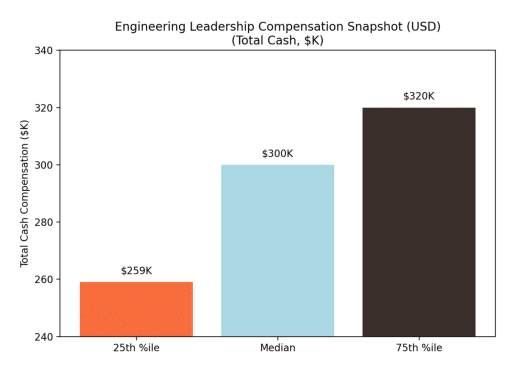
H1 ‘26 compensation figures & context - VP Engineering
Market Median: VP Engineering base compensation at Series A–C startups typically ranges from $260k–$295k, with total cash increasing at later stages or in highly specialized roles.
The AI / DeepTech Premium: AI-native leadership roles can push total cash (base + bonus) into the $325k–$375k range in exceptional cases, particularly at Series C+, where leaders span infrastructure, data, and applied ML at scale.
Stage & Equity Trade-off: Early-stage roles (Seed/A) typically anchor lower on base (often high-$200s + equity) to maximize upside for the “founding” leadership team.
Founder insights
Aggressive AI Bidding: Founders should expect a meaningful premium for leaders who can span core engineering, data, infrastructure, and AI — often requiring materially higher cash or equity (often ~10–20% higher than generalist VP profiles).
Geography Neutrality: While top-tier compensation remains anchored to SF/NYC benchmarks, a growing number of companies are extending hub-level pay to remote executives to compete for the top percentile of talent.
2025 hiring benchmarks
Average Time-to-Hire (Executive): VP-level searches currently average 100–120 days (~79 days at Plenty), with time to shortlist typically 45–60 days.
Workspace: Offer acceptance rates are currently highest for companies that prioritize flexible working environments, as remote or hybrid options are now a baseline expectation for senior engineering talent.
Key insights
Interview Fatigue: Teams are conducting ~40% more interviews per hire (often expanding from 5 to 7 steps), contributing to longer overall time-to-hire.
The “one month” Rule: If you haven’t seen candidates that align with what you’re looking for in the first month, the search criteria likely needs a “pivot” check-in.
Speed as a Competitive Advantage: Startups that use “skills-based” screening (replacing multiple technical rounds with a single simulation) are reducing their time-to-hire by 20% to 50%.
Case Studies: We’re seeing a rise in take-home case studies that explicitly incorporate AI tools. For early-stage, hands-on roles, the emphasis has shifted from pure coding aptitude to impact, leverage, and velocity – reflecting how strong leaders actually build today.